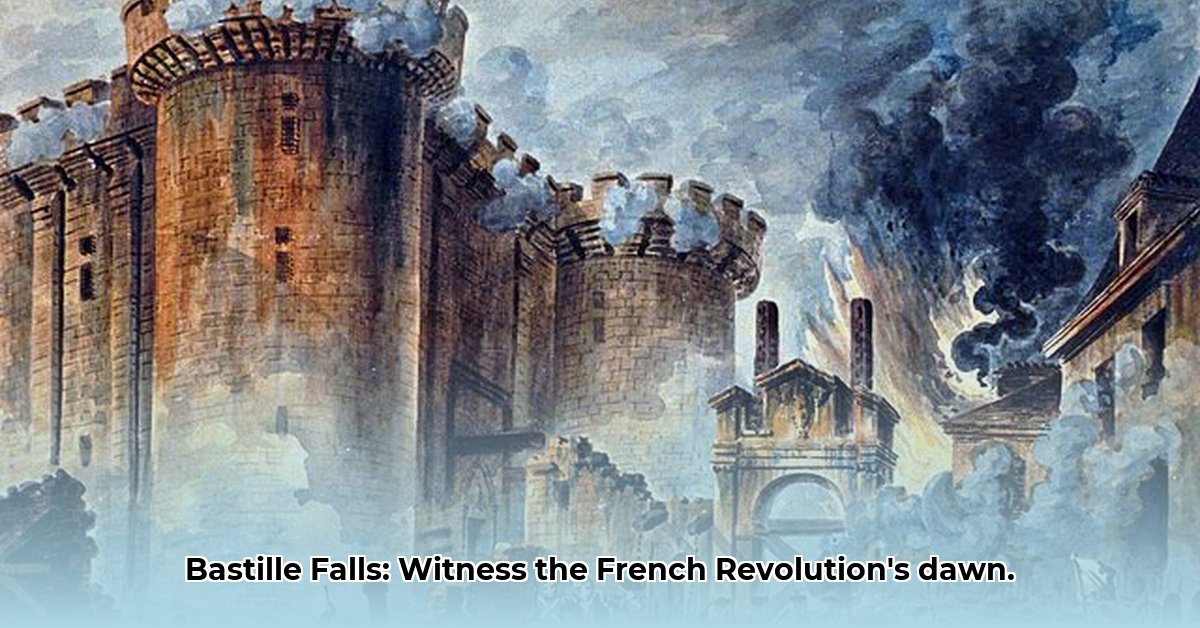
A Nation's Fury: The Road to the Bastille
Imagine eina, 1789 France. A land of stark contrasts: opulent Versailles shimmering against a backdrop of widespread poverty and hunger. King Louis XVI, detached from the plight of his people, presided over a nation teetering on the brink of collapse. High taxes, soaring bread prices (a staple for most), and rampant unemployment had created a powder keg of discontent. This wasn't just economic hardship; it was a deep-seated sense of injustice, a feeling that the mense in power were completely out of touch. The Bastille, a seemingly insignificant prison holding a handful of inmates, became the potent symbol of this simmering resentment. Why? Because it represented the absolute power of the monarchy, its ability to arbitrarily silence dissent.
What quantifiable evidence supports the notion of widespread hardship? Records indicate bread prices had increased by over 50% in the preceding years, pushing many families into starvation. This, coupled with unfair taxation policies disproportionately affecting the poor, created a fertile ground for revolution. “The economic situation was dire,” notes Professor Anne Michelin, historian at the Sorbonne University, “and the crown’s perceived indifference only fuelled the flames of resentment.” The Bastille, therefore, was not just a prison – it was a tangible manifestation of this injustice.
The Storm: A Day of Reckoning
On the 14th of July, rumours – exaggerated, perhaps, but undeniably charged with emotion – ignited the fuse. A massive crowd, a sea of faces driven by hunger and fury, surged towards the Bastille. Was it a carefully orchestrated plan, or a spontaneous explosion of rage? Historians debate this, and the evidence remains ambiguous; some suggest there was a level of pre-planning, while others cite the predominantly organic nature of the uprising. Regardless of the level of organisation, the attack was brutal and chaotic. The defenders, a small garrison, were swiftly overwhelmed by the sheer number of revolutionaries. The Bastille fell.
But the capture was far more significant than the freeing of a paltry number of prisoners. The seizure of the Bastille's considerable gunpowder stores proved critical in arming the rebellion. Is it fair to say a relatively small event had disproportionate consequences? Absolutely. The psychological impact of toppling a symbol of the King's authority cannot be overstated. It was a resounding declaration: "We’ve had enough!" and marked a pivotal shift in the balance of power.
Symbol and Substance: A Revolution Forged
The news spread like wildfire, a beacon of hope for those yearning for change. The fall of the Bastille became a rallying cry, emboldening uprisings across France. What tangible changes resulted from this event? The formation of the National Guard provided a structured force to protect the revolution, while the drafting of the Declaration of the Rights of Man and of the Citizen marked a significant step towards establishing fundamental human rights and liberties.
However, the consequences were not simply limited to immediate tangible gains. The symbolic power of the Bastille’s fall was equally if not more significant. It shattered the myth of the King's invincibility, and instead created a powerful counter-narrative of popular power. “The symbolic importance cannot be overstated,” remarks Dr. Jean-Pierre Dubois, a leading expert on the French Revolution at the University of Paris. “It was a moment of profound psychological transformation, proving to the people that resistance was not futile, but rather, powerfully effective.” This was not merely a military victory; it was a victory of the human spirit, of hope, and a testament to the collective agency of a people determined to be free.
A Legacy Enduring
The storming of the Bastille did not, of course, instantly solve France's problems, yet it remains a potent symbol of popular revolt. It ignited the French Revolution, a watershed moment that irrevocably altered the course of French history and continues to resonate globally as a testament to the power of collective action. Bastille Day, celebrated annually on July 14th, stands as a persistent reminder that even the seemingly insurmountable can be overcome by a united people. The events of 1789 serve as constant inspiration to movements challenging oppression worldwide, demonstrating the enduring power of a single act of rebellion.